
AI product development.
Useful intelligence, thoughtfully engineered. We bring machine learning, AI integration, and product design together to turn a real business problem into a usable product.
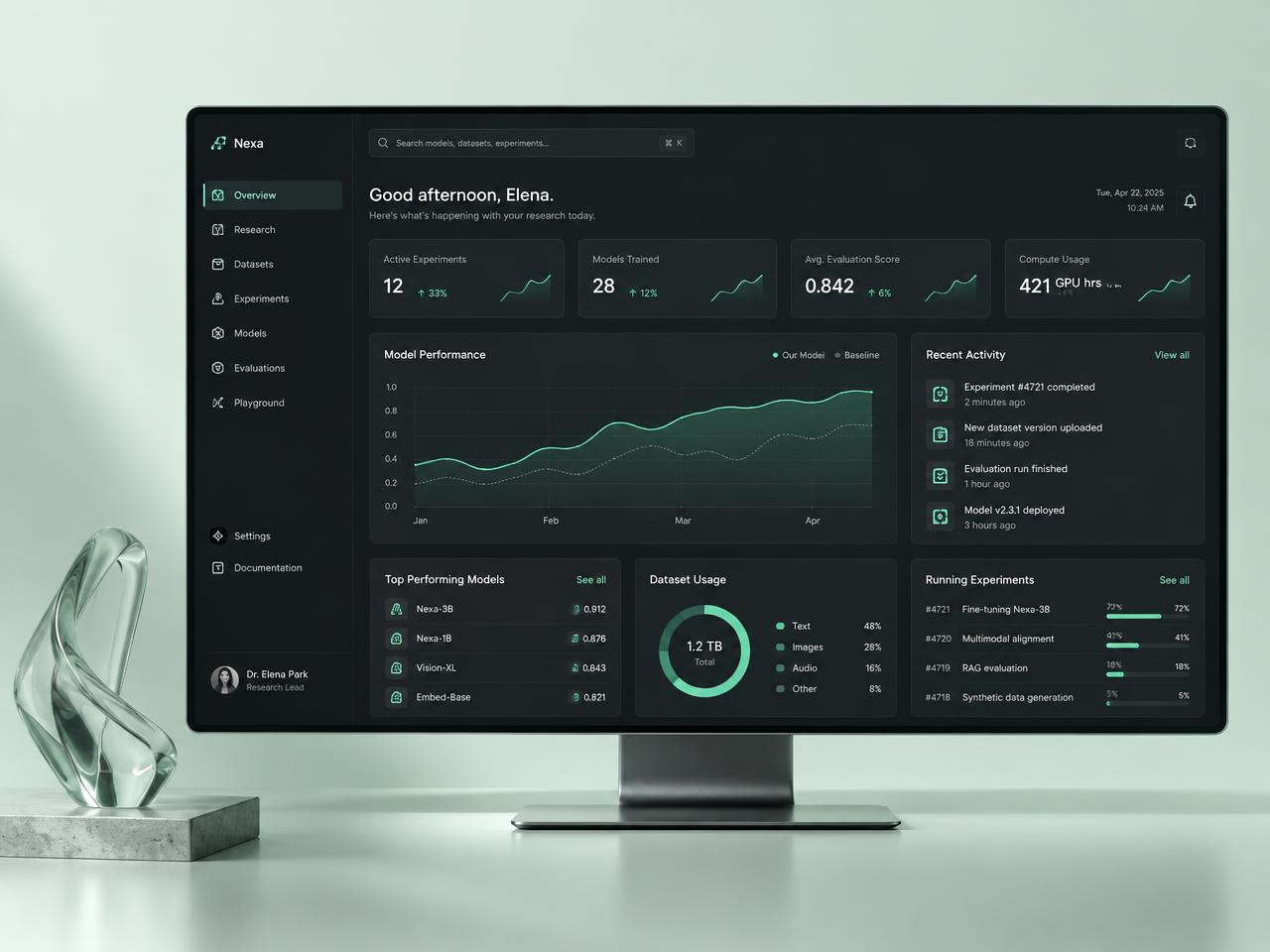
From possibility to practical value.
An AI feature is only useful when it fits the workflow around it. We start with the task, the data, and the people using the product, then explore where intelligence can make a meaningful difference. Our team combines ML engineers, AI integration engineers, full-stack developers, and designers, so the model, the interface, and the systems behind them are planned together rather than handed between separate teams.
Use case discovery
Identify where AI can help, what success looks like, and where a simpler, non-AI solution would serve better.
AI integration
Connect language models to your application, with clear prompts, structured outputs, and useful interfaces.
Knowledge & retrieval
Explore search and question-answering over your content, with source visibility and access requirements considered from the start.
Machine learning
Define the prediction or classification problem, assess data readiness, and plan evaluation around the task.
Intelligent workflows
Design automation with clear boundaries, human review, and sensible fallbacks when a model cannot complete the task.
AI interface design
Shape how people prompt, review, correct, and trust AI output, including loading, error, and uncertainty states.
Clear deliverables.
Shared direction.
Every project is scoped around your needs. These are typical outputs we define together at the start.
Explore our process- A defined use case and data requirements
- An interaction prototype and technical approach
- An integrated AI feature or product
- Evaluation criteria and test sets for the agreed tasks
- Monitoring considerations and a handover plan
- Teams adding an AI feature to an existing SaaS product
- Companies exploring whether AI fits a specific internal workflow
- Founders building a product where AI is central to the experience
- Product teams that need design and engineering working on AI together
- Python
- TypeScript
- OpenAI API
- Anthropic API
- Google Gemini API
- LangChain
- LlamaIndex
- PyTorch
- scikit-learn
- pgvector
- PostgreSQL
- FastAPI
- React
- AWS
Your questions, answered.
Can you add AI to an existing product?
Yes. Integration can begin with one focused workflow rather than a complete rebuild. Discovery establishes the available data, your current architecture, and what the feature needs to do.
How do you choose an AI model?
The choice depends on task quality, latency, cost, privacy requirements, and integration constraints. We compare an appropriate set against the use case rather than choosing by reputation alone.
Can AI outputs be guaranteed to be correct?
No. Generative and predictive systems can produce mistakes. A responsible product needs evaluation, clear user expectations, and human review or other safeguards wherever errors matter.
What if our data is not ready?
That is common and worth knowing early. Discovery reviews what data exists, its quality, and its access constraints, and some useful features can begin with model APIs and your existing content while data work continues.
From our insights.

How to Add AI to an Existing Product Without Breaking It
Most AI features fail because they start with a model instead of a user problem. Here is a step-by-step way to add AI to a product people already rely on.
How to Evaluate LLM Features Before and After Launch
LLM features need their own testing discipline. A practical framework for eval sets, metrics, human review, and regression checks that hold up in production.
Often paired with.
Generative AI
LLM features, knowledge assistants, and agents designed with evaluation and guardrails.
ExploreMachine learning
Predictive models, recommendations, and forecasts built on sound data and evaluation.
ExploreMVP development
From idea to a focused first version, with discovery, prototyping, and iteration.
Explore